
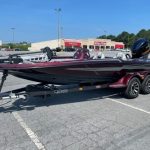
Ha! Your third photo is my boat! I bought it in June from Russell Marine in Alabama – 2020 with a 2020 Yamaha SHO 225. Awesome boat, love fishing it!
If you would like I can take these measurements today after I get home from work. Let me know if you would like any other photos, too.
My challenge with angling it into the garage was that I couldn’t make the turn. I had the angle dimensions in the garage according to the BCB site (23 ft with the tongue swung and motor down). But my garage is a 90 degree turn from the driveway, and not enough room sideways to back it in with the truck. So then I had to try to push it by hand. However, it’s heavy as hell even with help, so that didn’t work. Also the tandem axle trailer doesn’t pivot unless forced by pushing it with the truck, where a single axle can pivot. You may have more luck if you back straight in with just a slight angle at the end. Had to go to the backup plan of converting a section of fence to a gate in order to park it in the backyard, outside with the cover on (HOA doesn’t allow it to be parked in a driveway or visible from the street). Unfortunate, but I’m living with it. It’s better than having to pay for storage that’s not at the house!
Anyway, let me know what you need. Fred
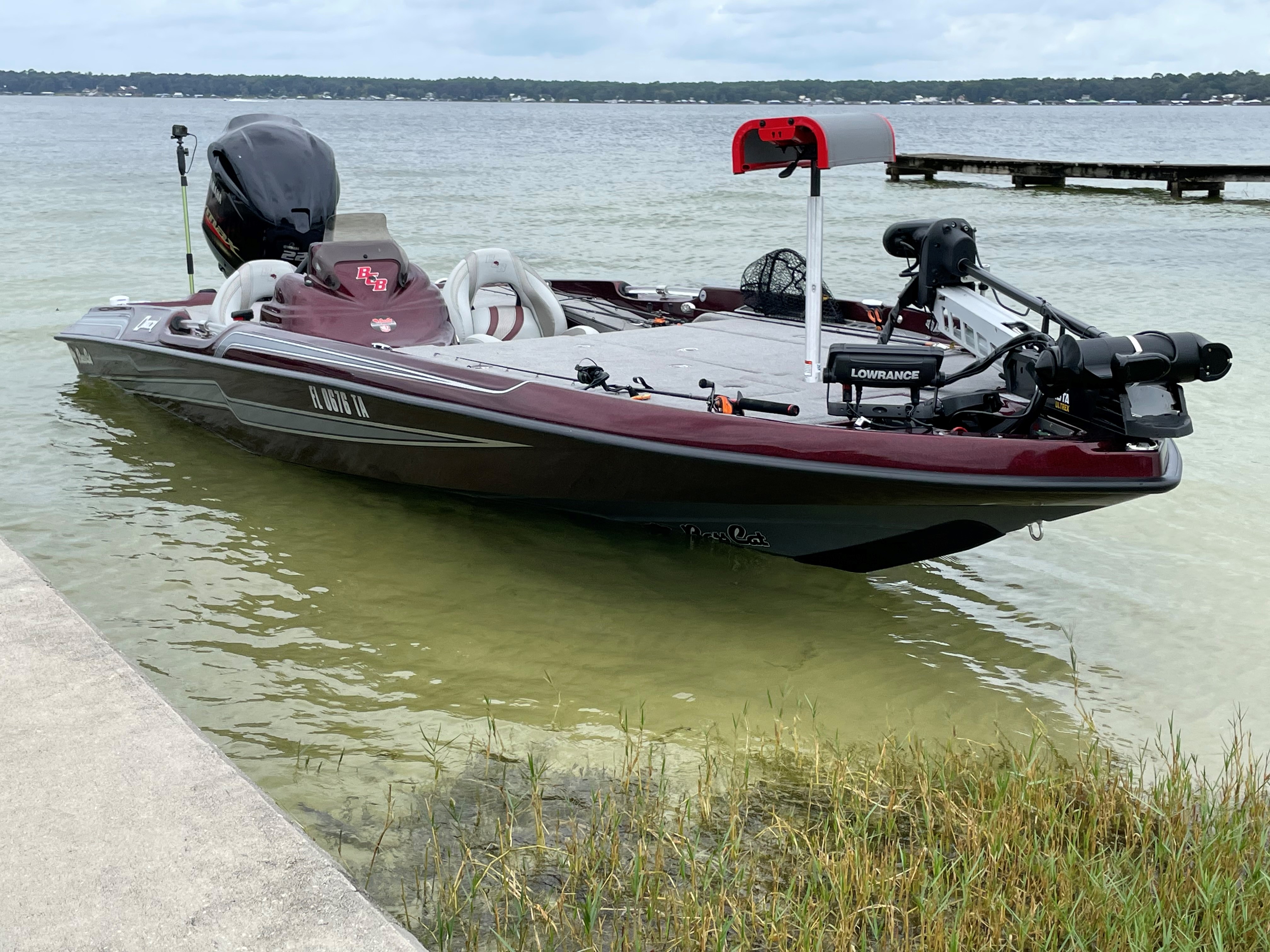
So here are the measurements I got:
Also took the following measurements:
I hope this helps. Please let me know if there are other measurements you need.
Fred
Olight Marauder 2: 14,000 lum, 800+ yards, USB chargeable. A bit pricey, but incredible light.
And the hybrid won’t be available until Feb/March timeframe. Supposed to be a beast, though, horsepower & torque-wise, at least by the numbers. Much more powerful than the current V8. But even the V6 turbo non-hybrid has good numbers compared to the V8. I would say it’s probably a pretty good truck for pulling – 12000 pound tow rating. I pull my Caracal with a Tacoma (m/t with normally aspirated V6), and have no problems. The only unknown is how bulletproof the new Tundra motor is compared to the current V8. Don’t know that yet. But if it’s a Toyota, it’s probably a safer bet than most other brands – my opinion. Your next problem will be trying to find one without a ridiculous markup – I hear most dealers are jacking up the “fair market value” BS since there is a lot of excitement about the new model. Not all are, but most are I think, and some aren’t even entertaining selling to non-locals or out of state. Just may take some searching, or good luck.
I had this exact thing happen to me once – I pulled the trailer out about 6 inches and tried again, and it worked as advertised. The bunks have to be out of the water enough to set the hull at the correct angle to go above the front roller, with the hull predominantly on the bunks. I also fish alone most times, so it helps getting it right first time, embarrassing to me if I don’t. I got the boat just last summer. It does feel good when I can get in and out by myself in less time than when someone else on the ramp struggles, though I prefer to be without spectators if I mess up, or keep people waiting.
I think the Caracal doesn’t load well if the trailer is too deep, esp in rough water. I had it once under the front roller, and once where it was cockeyed on the bunks, not straight. Both were cases of the trailer being too deep.
I back in so that the bunks are all wet, then pull back out until the top of the wheel fairing is out of the water, and the top of that back slope of the top of the fairing is just curving in. As described above, though I can’t see it when backing in, this generally equates to the short, inner bunks 1-2 inches out of the water, depending on ramps slope. It takes some juice on the motor (motor tilted as described above) to get it all the way up, but it works – once I feel the hard stop of the front roller, I know I’m there.
Only one time did I not have the trailer deep enough, and no matter how much I throttled up, that thing didn’t move past a certain point. It’s heavy. Had to back in a bit more and try again, then it worked. But that is easier to gauge than too deep.
I pull my Caracal with a 2020 Toyota Tacoma 4WD V6-3.5 MT, and I believe the Jeep has similar specs. I know that’s not the same as you are looking for, but may be similar. I was a bit worried to when I got the boat last year. My boat loaded is around 4k pounds (give or take, including motor, trailer, batts, gas, fishing gear, electronics, etc.) towing capacity of the truck is 6k. I don’t have any real issues, but like was mentioned above, it doesn’t stop on a dime so you have to brake early and long. The only other issue I have is pulling it out of the water on a wet ramp, but 4WD resolves that pretty easily. MPG takes a dive, but that’s not unexpected. I had to drive to AL from FL to get it, and the long drive went fine.
I think as long as you have some buffer between towing capacity of your vehicle and weight of what you’re towing, and take things easy while driving, you should be okay. Obviously, more towing capacity the better.
My Caracal fully loaded (225 SHO, 54 gals gas, all electronics, fishing, and safety gear) on trailer is pretty close to 4K. Probably pretty close in weight as an Eyra is a bit longer but narrower, I think listed as slightly lighter hull (but within 50# of the Caracal at 1725#?). If the Ridgeline is 4K towing capacity, that’s closer than I would be comfortable with. I tow mine with a ’20 Toyota Tacoma w 4WD, 6K towing capacity. Works just fine. Anyway, my experience – certainly not the only answer.
Yes – purchased from Russell Marine in Alabama June 2021. I can send you any info directly if need specifics.
I very much appreciate your attention. Thanks for the info.
Fred
Thanks so much for the info. Below is more info and photos from my boat that might show some variance from your tests.
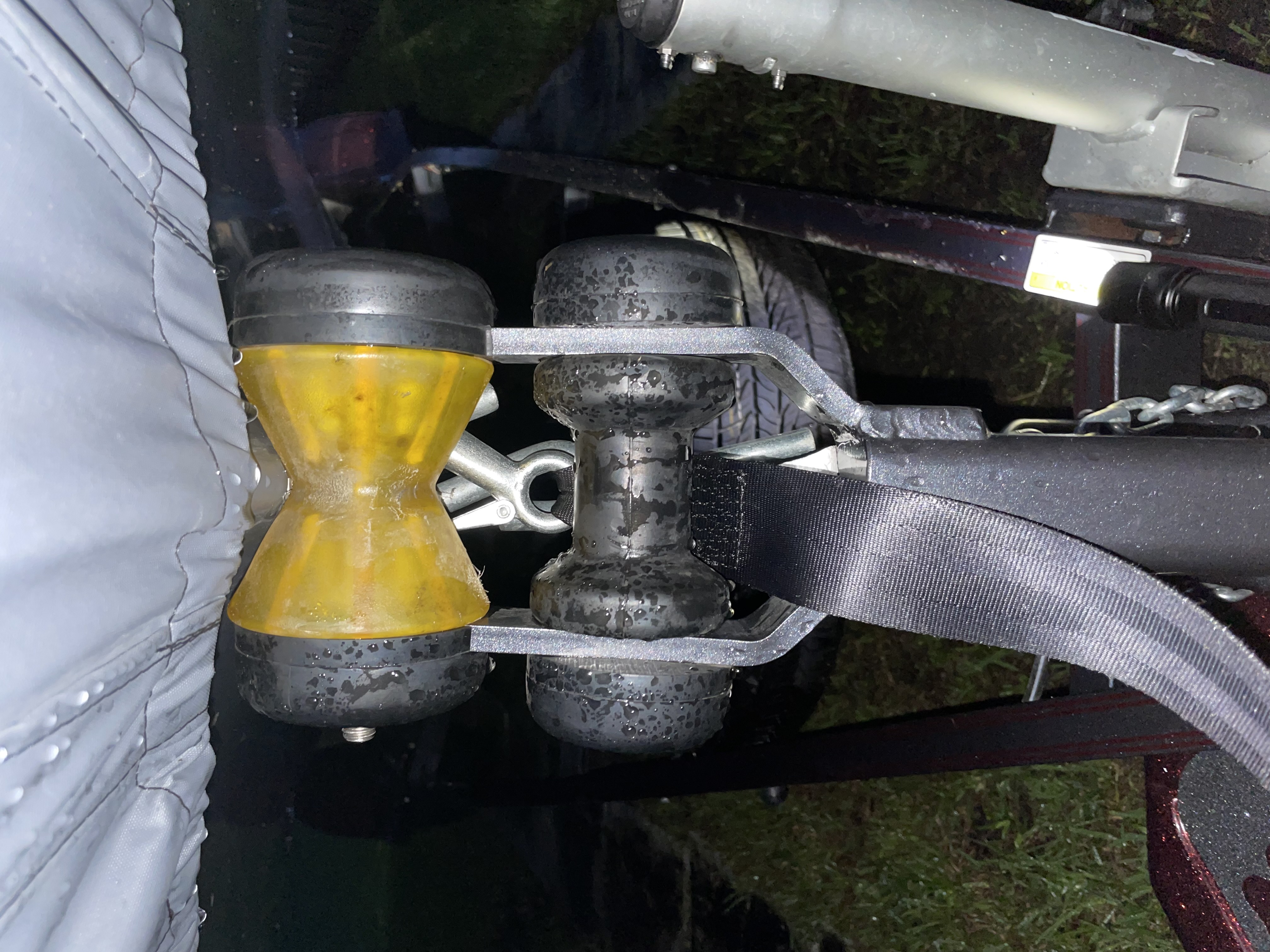
First, I measured the end of the bolt to the outer edge of the black rubber on the upper roller – measures 0.565″ (measured parallel to the bolt’s horizontal center). I don’t know what the spec of that should be. However, it looks to me like it should not stick out that far, and I think the reason can be seen below. It looks to me like the fork that holds the bow roller on is compressed. When I measured, there was a 2-3 degree difference between the left and right vertical side of the forks. Is that supposed to be that way? If not, it could be that the nut was over-tightened onto the bolt, exposing more end of the bolt than intended. That would actually mean that the bolt is not too long, but nut over-torqued, creating more free end of the bolt sticking out from the black rubber roller. It may only take a 1 or 2 more exposed threads on the bolt to make it closer to the hull, or the angle difference smaller than what you observed. This is the only thing I can think might be out of spec on my rig. Everything else seems to be in order as far as I can tell, and even this may not be out of spec. I do suppose that the bolt could be too long, but I think with this observation below, it is probably isn’t.
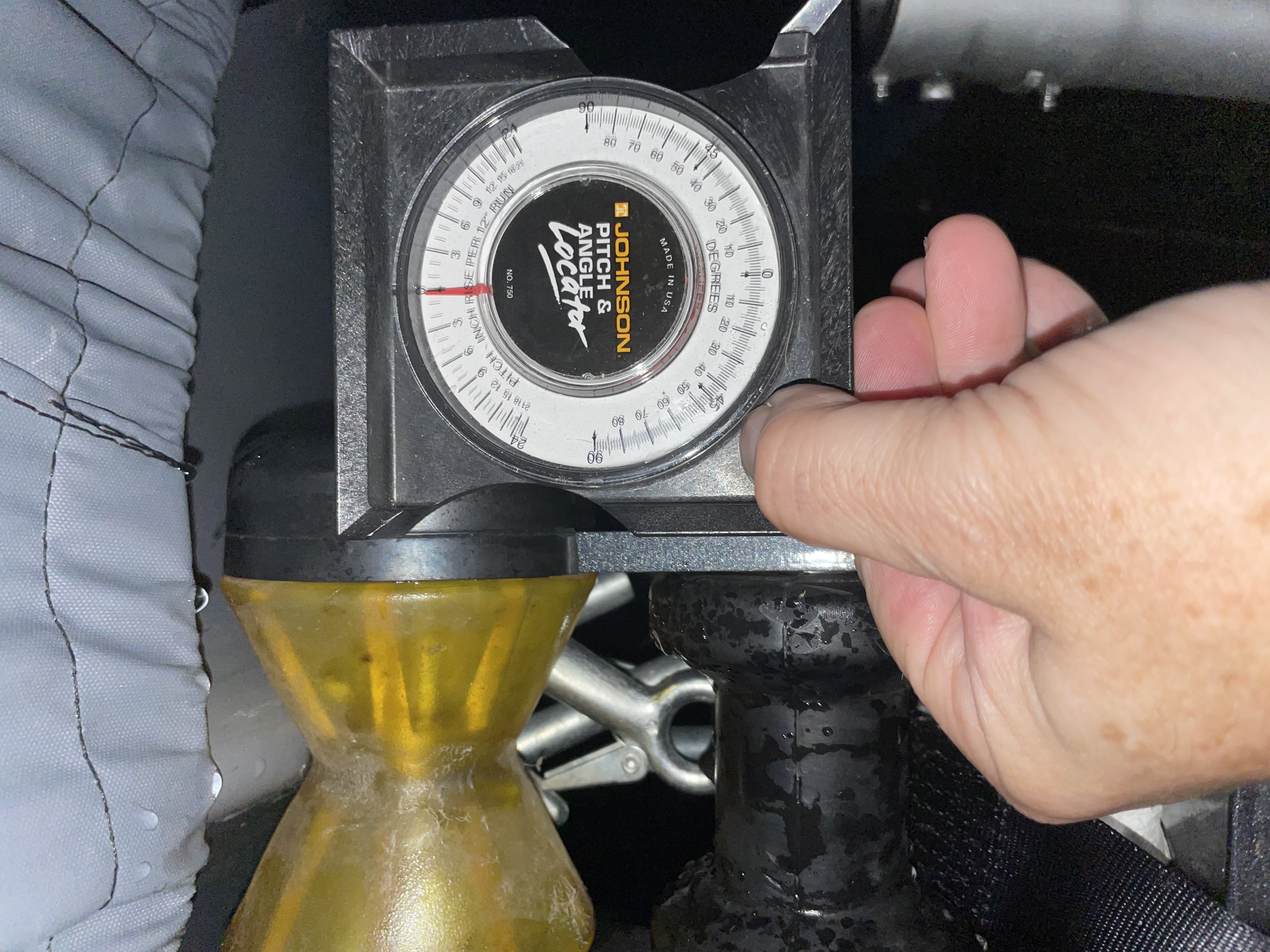
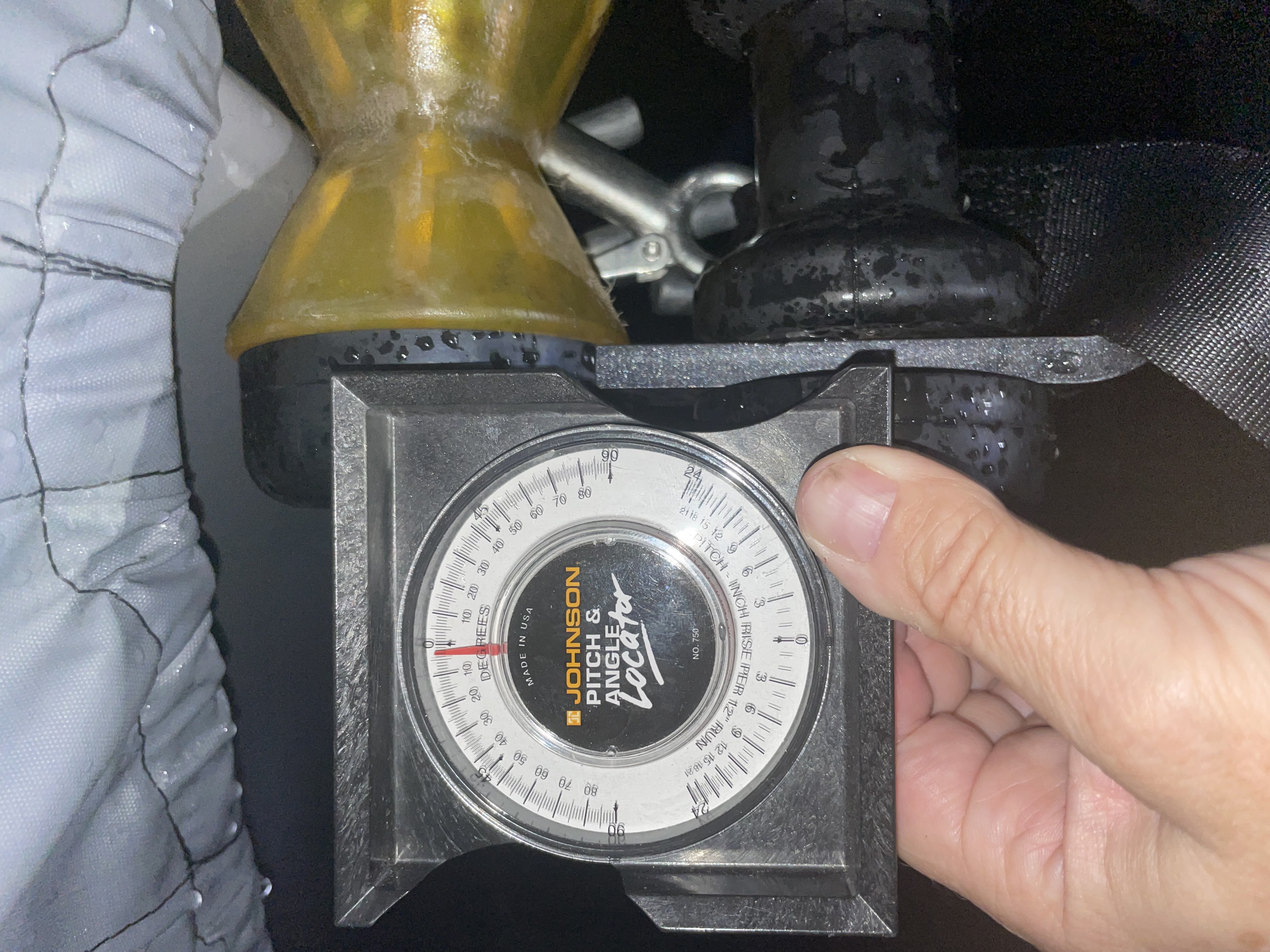
When I measured the degree difference of what mine actually is (similar to what you were measuring above), I observe that there is only about a 5 degree difference between the angle of the bolt to roller vs. pitch of the bow where the scratch is, seen below.
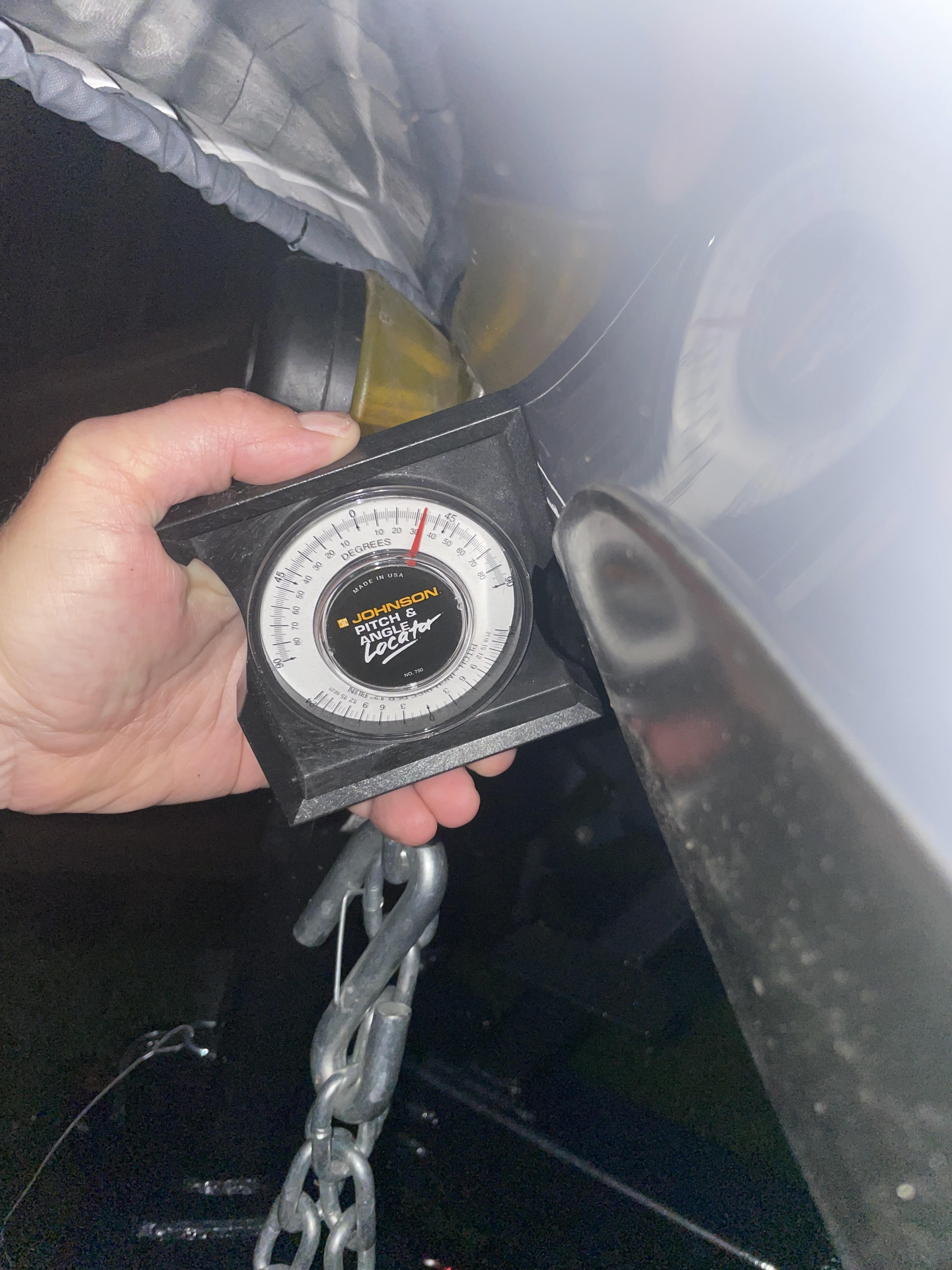
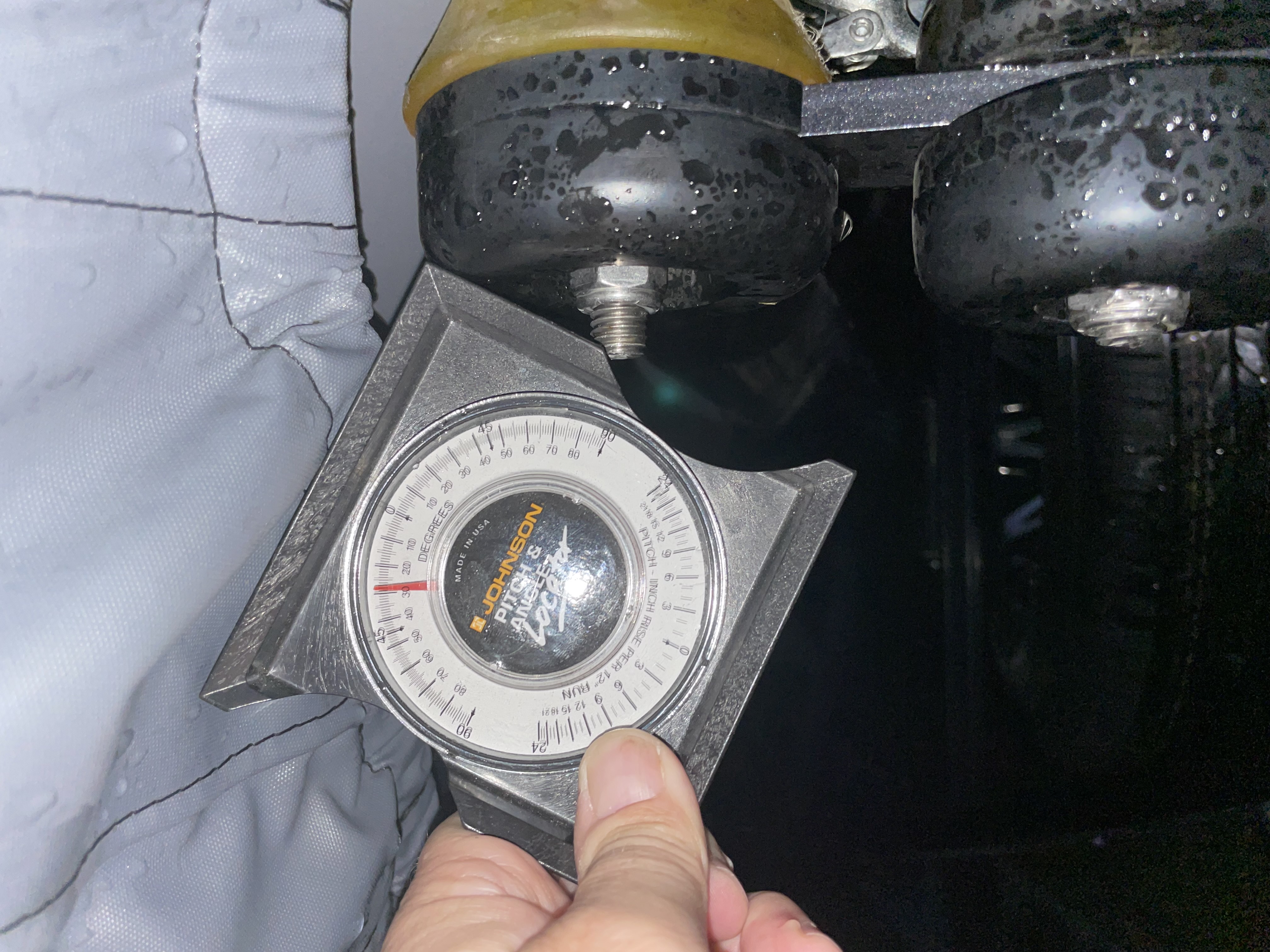
Could there also have been some compression of the black rubber under the weight and momentum force of the bow, enough that may have closed the distance between the end of the bolt and hull where the scratch is? In the original post photos, I can see witness marks where the black rubber rubbed on the hull when the scratch was made, 2 black marks roughly parallel to each of the scratches. I can’t tell how much compression would be required to facilitate that, or how much there was in this case if any. I also think that may have only accounted for some of the 5 degree difference – it was also windy, and the hull wasn’t straight on the trailer, which could have caused the port side to be higher than starboard relative to the trailer, which would have made the bow where the scratch is more vertical and require less than 5 degrees to make contact and create the scratch when combined with some black roller compression.
My disclaimer is that my measurements are rough, observed with the tools I have. There could be some variance in the measurements and parallax error in the photos.
I really do appreciate you all looking into this. I really just want to understand it, and to see if there is something that needs fixed on my trailer. More importantly, though, I’m always trying to learn and be better at this process, and avoid this in the future.
Your help is very much appreciated. I have nothing but love for my boat and this company! I can’t imagine any other company taking time to understand this with a regular customer, and the fact that you are is something you all should be very proud of.
Fred
Don’t get me wrong – I’m not claiming there was malicious intent, and am not angry by any stretch. I just wondered if that was technique in final testing or something of that nature. It was a folded piece of carpet that sat 3 inches round directly under the float. There is very little room for things to move around on the bottom – I found lots of pieces and bits when I first got the boat, so I know it happens. This just seemed different. Not a big deal. What it was doing was causing my bilge pump to run even in auto with no water in the bilge.
One Lowrance HDS Live 12 at the bow, another at the console in a 2020 Caracal. Just switched from 4 AGM/leads to 2 lithiums (one 12V, one 36V) with Power Pole Charge. Couldn’t be happier.

I had a 52″ Ultrex in my 2020 Caracal before I switched over to a Ghost. Only 1 graph up front on a Kong mount, and every time I deployed the TM the cable impacted the Live 12 I have there, so I had to move the cable away from the graph by hand after getting the TM down, even with the cable sleeve. I would think having two graphs up there would make that cable management more of a challenge. Even with the pedal back it was an issue for me. I like having it back as it is a more natural and comfortable position while fishing for me. Ghost does a better job of cable management, imho.
The 12V (on the right side of the photo) is 215 AH, 65AH for the 36V side. With the Power Pole Charge, you set up the charging priorities in the app, and I think I have it pretty evenly split between engine and trolling, maybe biased slightly to the trolling side having priority. With that, the PPCharge then manages what gets charged or used when. I copied what John Crews does for the setup – I think he has several youtube videos about it, one just this week (his physical layout is a bit different than mine as he sets his boat up from scratch with more compartment space in the Puma STS, whereas I went with some of the constraints that were in place from when I had the old batts). I don’t fish tournaments so I didn’t see a need for multiple batts on either the 12V or the 36V side. I just run one per side (it was expensive enough as it was!), and if something goes wrong (which I don’t think will happen, but you never know) my recreational fishing day would just end early. I dropped about 145 pounds in the switchover.
Having stated that, based on my last time out, I could probably go several days without plugging in to recharge with this setup. I was out a total of 9 hours, 1.5 of that on the big motor (Yamaha SHO), the rest fishing in moderate winds and seas, and the TM (Ghost 36V) running at about 40-50% for 3/4s of the fishing time. On the 12V side, I have 2 HDS Live 12s, Active Target, StructureScan 3D, 2D in-hull, and Active Image 3-in-1 on the Ghost, none of which I turn off when not using. When I was done at the end of the day, I was at least at 95% power remaining on both 12 and 36. The alternator recharge when running on the big motor is VERY efficient with PPCharge, and lithiums charge much more quickly than AGMs and lead acids. The lithium batteries are incredible, but the Power Pole Charge is the star of the system.
© 2026 Bass Cat Boats
